
How to Choose Outdoor Furniture You'll Still Be Happy With in Five Years
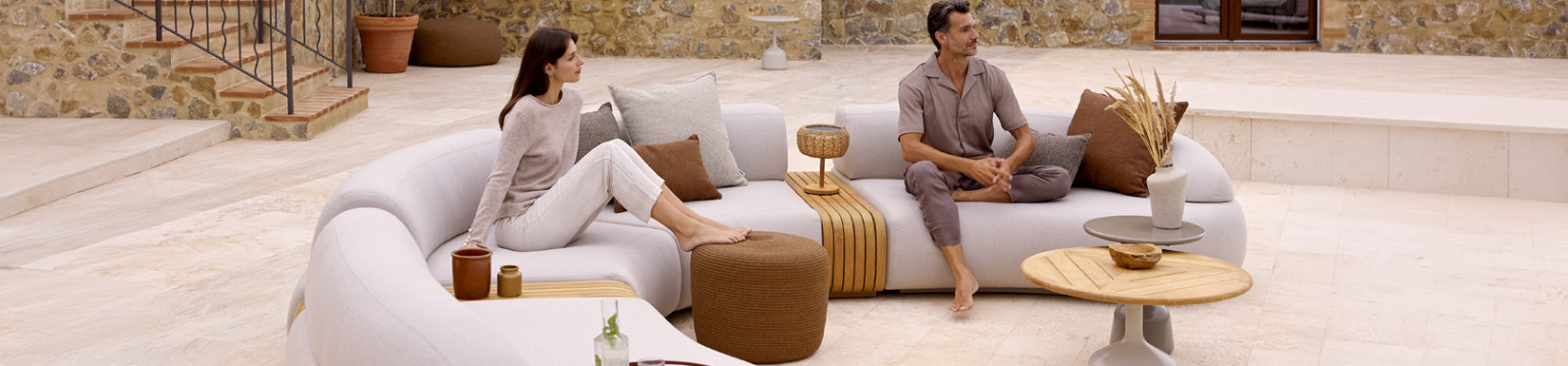
Choosing garden furniture depends on your individual style and what feels comfortable, but before you get too far into materials, colours or individual pieces, I think the first question is much simpler: how do I actually use this space? What am I not getting from it now? Whatever your budget, garden furniture is an investment for you, so it is worth thinking about how you want to live with it rather than simply what looks good in a photograph.
You do not need to arrive with all these answers worked out. A good retailer should be able to ask the right questions and work with you to narrow the choices.
Start with how you actually use the space
For many people, a garden has evolved rather than been planned. A few chairs have been bought over the years and scattered around, or perhaps you have moved house, renovated part of the garden or created a new terrace and suddenly have a space you have never really used before. Before choosing the furniture, think about the moments you would like that space to give you.
Perhaps there is a corner that catches the morning sun where you would love to sit with a coffee or somewhere comfortable to make an awkward phone call, to read, or sit with family and friends in the evening. A lounge area in the afternoon or evening sun can be completely different from a dining area that you want to use earlier in the day. If you have room, I believe having more than one place to sit should be considered, because different parts of a garden can work at different times and for different reasons.
Working from home has changed this too. Even clients who have a garden office have asked for a lounge-style chair and a low table nearby because they want to get away from sitting upright at a desk. They might make notes, take a phone call or simply think through something in a more relaxed position. Sitting outside with birdsong and a bit of natural distraction can change the way a working day feels. A good parasol can also make an outdoor working spot useful for longer than people sometimes expect.
And do not dismiss a small outside space. A balcony, courtyard or tiny corner of a garden is still another space that you have paid for. You would not ignore a small room inside your house simply because it was small; you would think about how to make it work. The same applies outside. Even one good chair and a small table can turn a place you previously walked past into somewhere you actually use.
Make the furniture fit the space, not the other way around
Once you know what you want the space to do, the next job is making sure the furniture fits properly. It needs to be proportionate and scaled to where you live. There is nothing worse than buying lounge furniture and discovering that you can only just stand up and shuffle past the table.
Do not measure only the footprint of the furniture - think about how people use it. Consider whether a dining chair can be pulled backwards comfortably, whether the next person can get past without squeezing between chairs, and whether you can walk around the table when everyone is seated. You want people to feel comfortable, not tucked into a space simply because the set technically fits.
Look at doors too. Not everybody has sliding doors, and many garden doors open outwards. Will an open door hit a chair or table? If you are adding a parasol, where will the base sit and how much room does it need to rotate or cantilever? These are small practical questions, but they make a huge difference once the furniture is in place.
If you are unsure, a good retailer should be able to help you work through the dimensions. At Garden & Terrace we can produce a simple schematic showing the furniture within the space and the clearance around it. It is much easier to solve a problem on paper than after the furniture has arrived.
Think about the journey through the garden
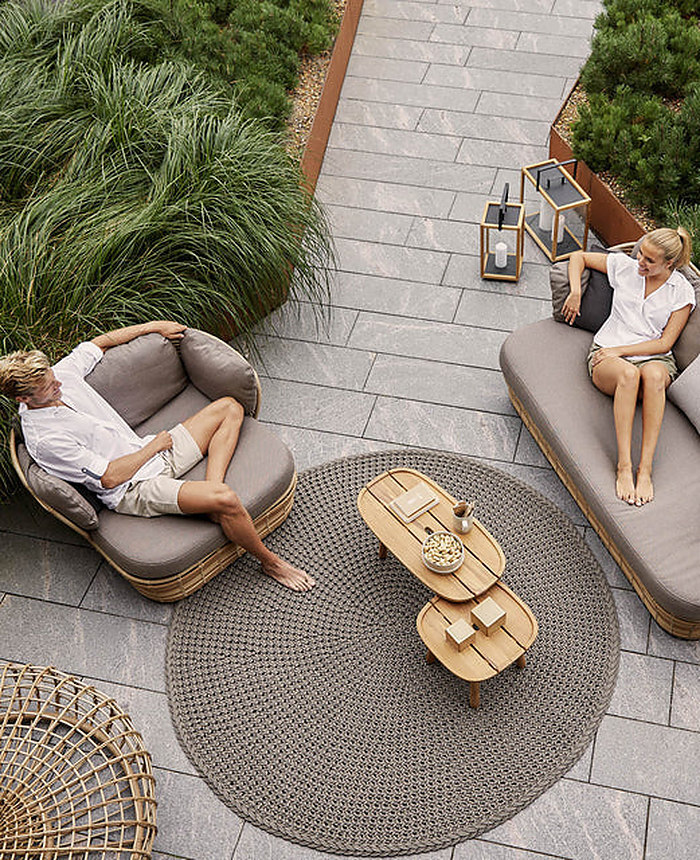
Furniture should not just fit the terrace; it also has to work with the way you move through the garden. Sometimes it is lovely to create a pause in a garden, so that you move around a seating area rather than simply walking in a straight line. But everyday life still has to work. You may be going to collect washing, check on children or the dog, or get something from a shed at the end of the garden.
If a position is beautiful but also sits across your main route, think about whether a few lounge-style chairs would work better than a large modular arrangement because they are easier to navigate around or between. You can still create a place to stop and enjoy the sun without making the garden awkward to use. The garden should feel designed, but it should also feel easy.
If you are not sure what will work, take a few photographs and rough dimensions with you. The retailer will know the ranges well and can often spot the practical issue - or find a better solution.
Measure the delivery route as carefully as the garden
This is one of the most important practical points: can the furniture actually get into the garden? A side gate does not automatically mean the answer is yes. Start at the kerb and walk the whole route. Is there a front gate, a narrow path, steps or a sharp turn before you even reach the side of the house? Can a large carton be turned towards the garden gate? Does the passage narrow beyond it? Is there existing furniture or anything else that needs moving first?
If the furniture needs to come through the house, repeat the process indoors. Corridors, doorways, ceiling height, corners and kitchen or back doors can all create restrictions. Ask for the assembled dimensions and, just as importantly, the packaged dimensions of the largest piece. Some items may need to be tilted or turned, so the narrowest points and tightest changes of direction matter just as much as the final doorway width.
One simple trick I have used is to make a rough cardboard version of the largest carton. Buy a couple of large removal boxes, tape them together to roughly the same dimensions and try moving that shape along the delivery route. It is very light, but that is not really the point. The awkwardness of holding a large box away from your body quickly shows you where the difficult turns are going to be.
You want delivery day to be exciting. You have saved, chosen carefully and waited for something you really want. The last thing you want is for it to arrive at the front door and for the first thought to be, 'How on earth are we going to get this into the garden?' A little planning protects the pleasure of the purchase.
Your retailer should be able to give you the packaged dimensions and talk honestly about whether a particular piece is realistic for your access when you discuss with them and before you order it.
Think about the furniture when people are using it
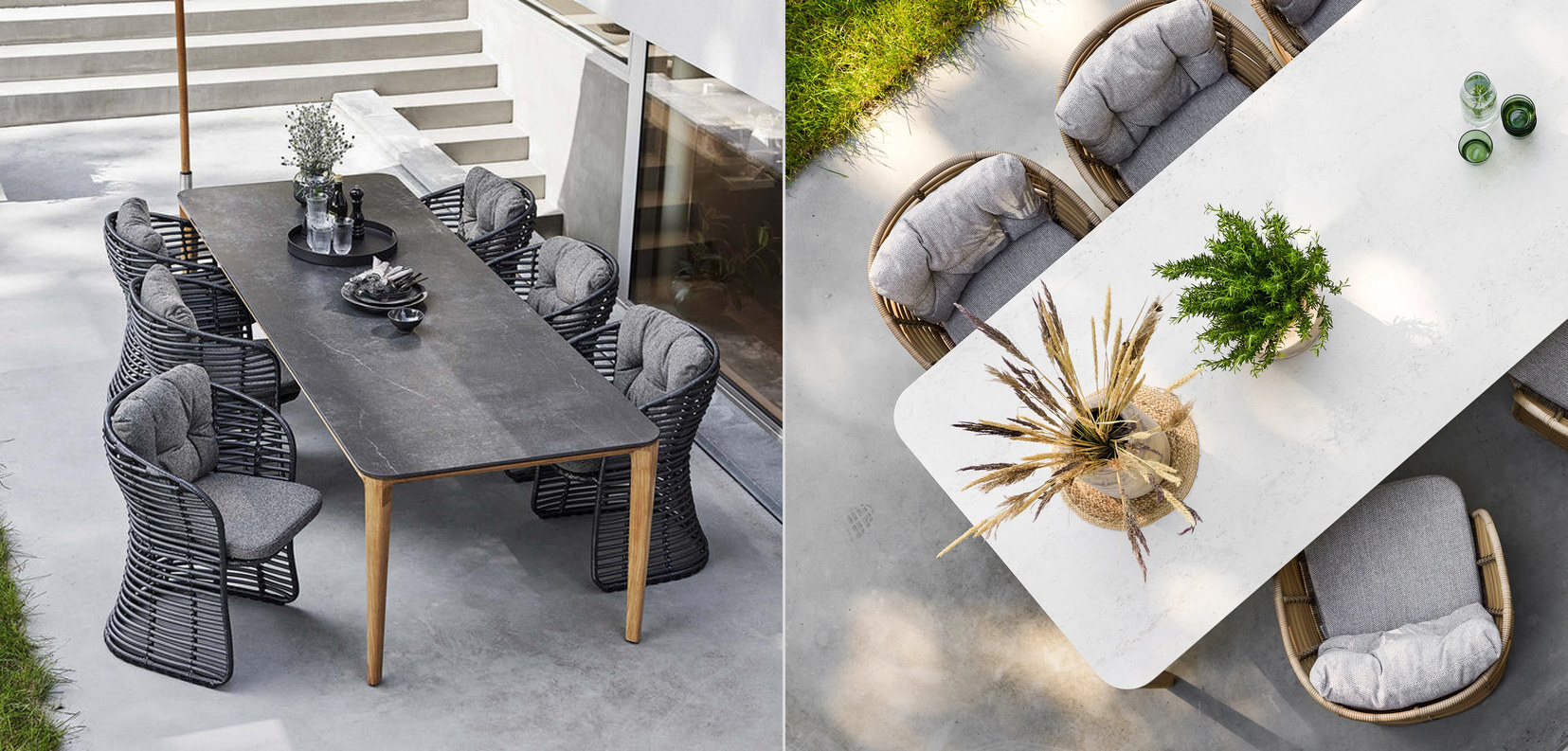
A dining set can look wonderful when it is empty, but what matters is what happens when people sit down: whether they have enough room between them and can pull their chairs out without bumping into something behind. Do not assume that because you might occasionally have eight people for dinner you need eight chairs permanently crowded around the table.
If six people is your normal life, I would rather give six people a little more room and solve the occasional eight-person evening separately. Depending on the space, that might mean an extending table, another small table that can be brought alongside or a folding table for occasional use. Comfort matters far more than making the garden look ready for the largest gathering you might host once or twice a year.
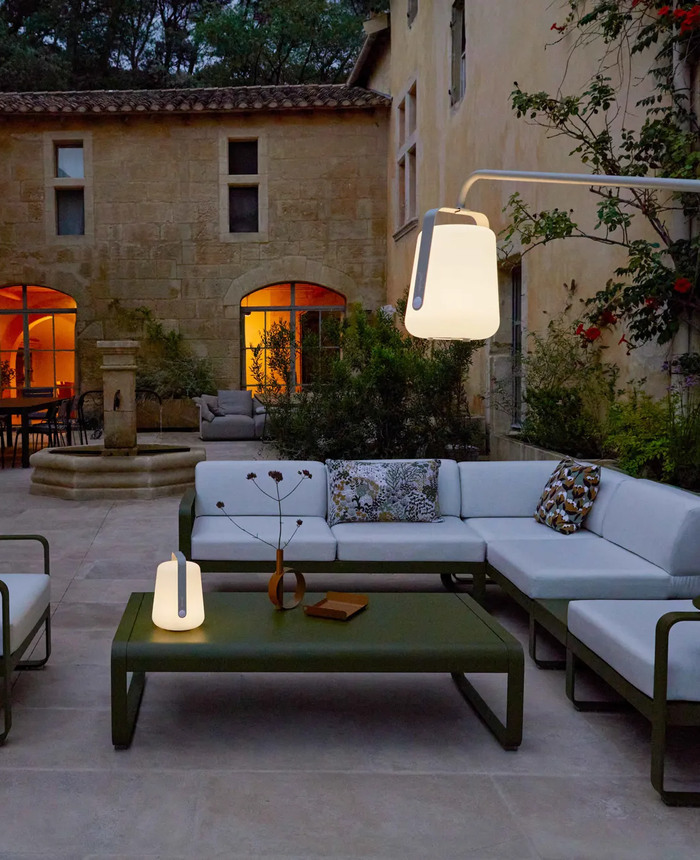
Also think about what happens after dinner: do people have somewhere else to move to for a drink - perhaps lounge seating, a fire pit area or simply another comfortable part of the garden? Lighting and outdoor heating can extend an evening beautifully, but even if you have no second seating area, make sure the dining furniture is comfortable enough that nobody feels they have to rush back indoors as soon as the meal is finished. Your garden is another living space. Use it.
This is also why sitting on the furniture and talking through how you actually entertain can be more useful than making a choice from a photograph alone.
Choose pieces that sit together
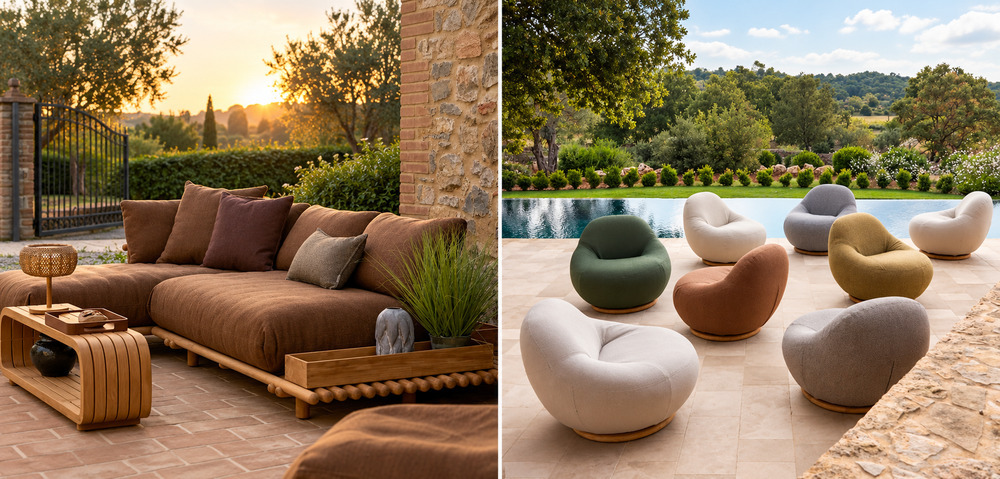
Style matters too. Personally, I prefer furniture across a garden not to become too eclectic. That does not mean everything has to match exactly. Colour can move beautifully from one area to another - perhaps a strong red near the house, then a burnt orange and a softer yellow further away - but the pieces should still feel as though they belong to the same overall story.
I have tried pairing different styles and different brands in my garden and in the shop. Sometimes two colours look as though they should work together, but the furniture simply does not sit together well. Where several areas are visible at once, choosing from a related palette, or at least the same design language can make the whole garden feel much more considered. In a very large garden, you can get away with more separation, but even then, the journey from one part to another matters.
If you already have furniture you want to keep, show the retailer photographs of it and of the garden. Someone who knows the ranges well should be able to help you find pieces that sit comfortably alongside what you already own.
A few practical details you will appreciate later
Cushions are a good example. In the UK we often have showers rather than days of constant rain, so what matters is how quickly the cushion can drain and become usable again. If a shower passes and the cushion releases water quickly, you are much more likely to get back outside and use the furniture rather than waiting for everything to dry.
Removable, washable covers are another detail that sounds minor until somebody spills something. Being able to take a cover off and wash it removes a lot of stress. These are the sorts of things that are easy to overlook when you are shopping from a beautiful photograph, but they make a real difference to everyday life.
You should not have to guess about any of this. Ask how the cushions drain, whether covers can be removed and washed, and what aftercare is available - your retailer should know.
Before you order
- Decide what you want the space to do in everyday life, not just on special occasions.
- Measure for people moving around the furniture, not just the furniture itself.
- Check doors, parasols and the natural route through the garden.
- Walk the complete delivery route from the kerb to the final position.
- Ask for packaged dimensions of the largest pieces if access is tight.
- Think about your normal number of guests rather than the maximum you might entertain once a year.
- Consider how different pieces, materials and colours will sit together across the garden.
- Ask practical questions about cushions, covers, care and aftercare before you buy.
Do the practical thinking first, then enjoy the results
All this measuring and planning can sound terribly practical, but I say it for one reason: so that once the furniture arrives, you can simply enjoy it. There is something wonderful about heading home and knowing that, if the weather allows, you can have a cup of tea outside in a place that feels right. That is what you are creating.
None of this is meant to make buying garden furniture feel complicated. The point of a good retailer is to help you answer the practical questions before you buy, so that afterwards you can forget about them and enjoy the furniture.
Buy the best you can comfortably afford; a beautiful outdoor space doesn’t depend on having the biggest budget. There is usually a way to make a space work, the aim is to choose furniture that fits your garden, fits the way you live and still makes you happy several summers from now.
News
Teak, Outdoor Fabric, Aluminium or Synthetic Rattan: Which Garden Furniture Material Is Right for You?
Choosing garden furniture comes down partly to individual style and what feels comfortable to yo...
How to Choose Outdoor Furniture You'll Still Be Happy With in Five Years
Choosing garden furniture depends on your individual style and what feels comfortable, but befor...