
Teak, Outdoor Fabric, Aluminium or Synthetic Rattan: Which Garden Furniture Material Is Right for You?
Choosing garden furniture comes down partly to individual style and what feels comfortable to you.
Take a few pointers from the way you have styled your house. Treat the garden as another room, bringing some of the same colours, textures and materials outside can create a lovely sense of flow between the two spaces.
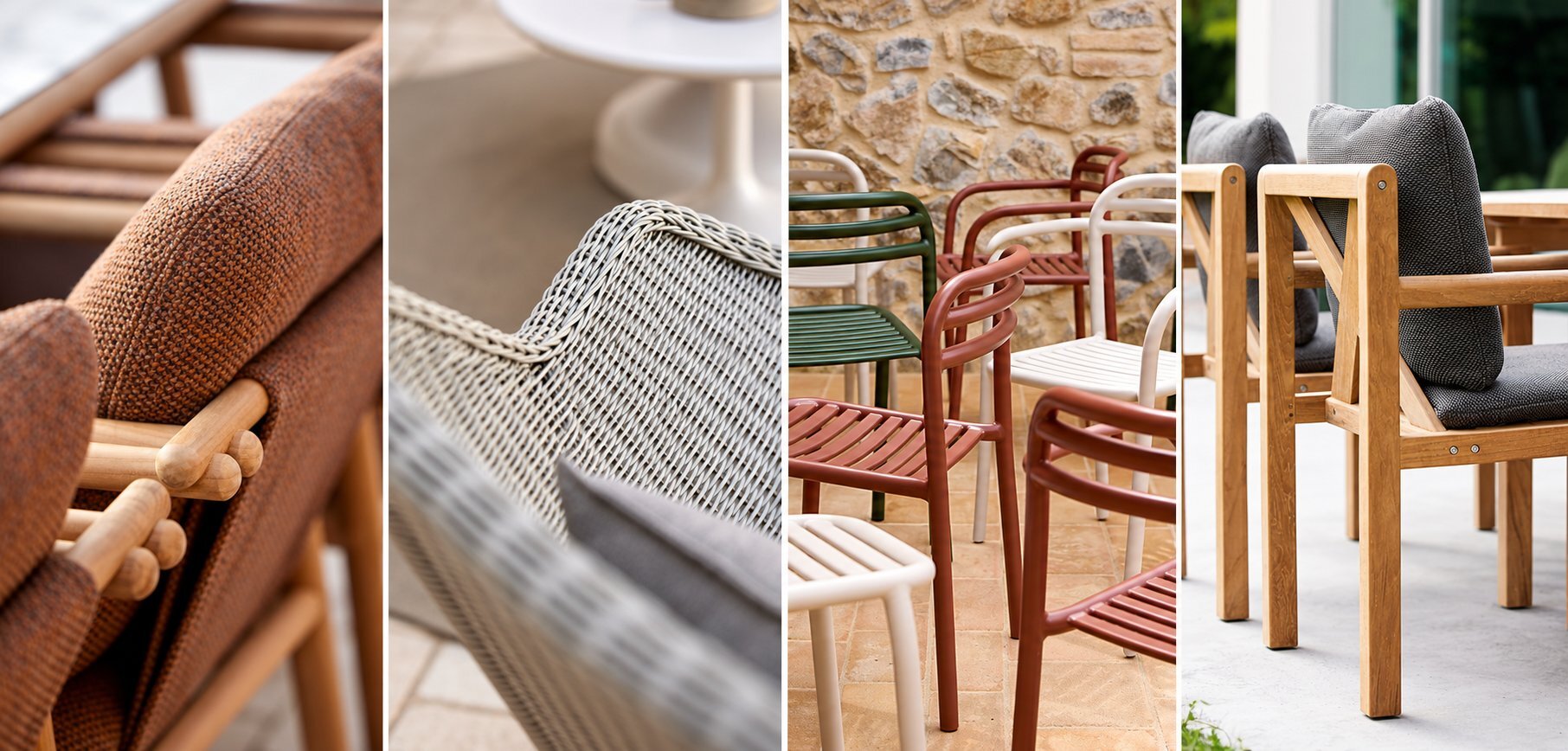
It isn't only about how furniture looks either. The way it feels matters: the warmth of timber, the softness of outdoor fabric, the texture of a woven seat or the smooth finish of powder-coated aluminium can completely change the character of a piece.
There isn't one material that is better than the others, they simply offer different things.
Teak: warm, natural and timeless
Teak gives a sense of warmth and somehow always looks at home in a garden. There is usually something nearby for it to relate to, a tree, a woody shrub, perhaps timber decking, so it settles very naturally into the landscape.
There is also something wonderful about the feel of beautifully made teak. Good furniture should feel smooth, substantial and carefully finished, with softened edges rather than sharp corners and thin sections of timber.
There is a lot of inexpensive teak furniture available, but I would look carefully at how it has been made. Thin sections of timber, rough edges and pieces that rely heavily on visible screws rather than proper furniture joinery would make me cautious.
With better furniture, look at the thickness of the timber, the grain, the finish and the joints. Carefully made joints and wooden dowels can indicate that somebody has taken time over the piece, rather than simply assembling it as quickly as possible.
There is an environmental consideration here too. If timber is being used to make garden furniture, I would much rather see it made into something substantial enough to last for many years than into a piece that starts splintering or working loose after a season or two.
That does not mean everybody has to buy at the very top of the market, but cheap teak can sometimes be a false economy. It is worth looking beyond the photograph and inspecting how the furniture has been made.
What about teak turning grey?
Teak will weather outdoors and gradually move towards a silvery-grey colour. That is not the timber deteriorating; it is a natural change to the surface caused by exposure to the weather and sunlight.
Personally, I love it. The feel of good teak doesn’t change because it has been weathered. You still see the grain, the proportions and the workmanship, it simply develops a different colour.
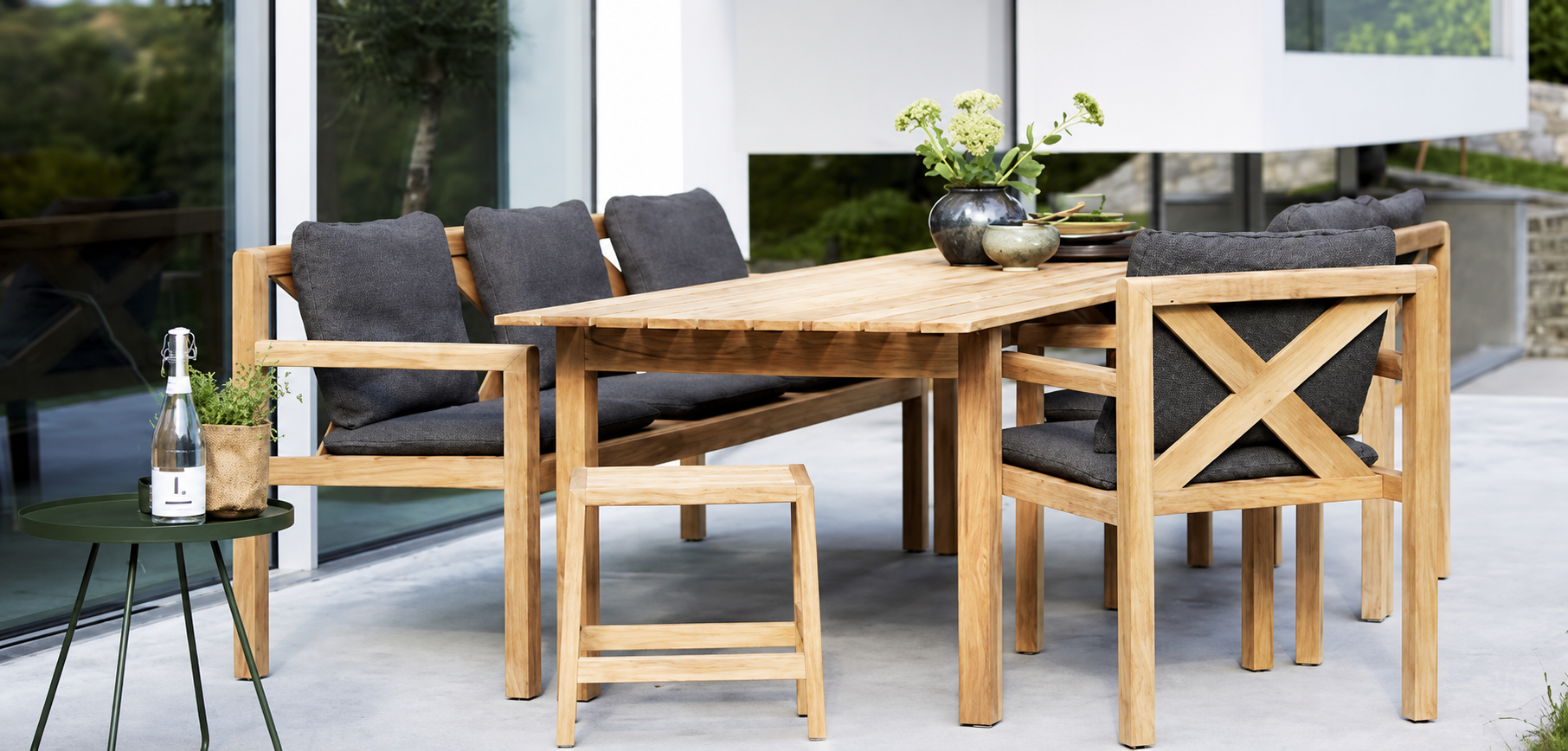
If you want to retain the richer honey-coloured appearance, that is possible, but be realistic about the maintenance involved. The furniture needs to be clean and properly dry before treatment and may need light sanding and periodic re-treatment. Oils and protective finishes can also alter the colour slightly, so the finished result may not look exactly like untouched new timber.
There is nothing wrong with choosing that route if you enjoy looking after timber. Equally, there is nothing wrong with doing what many historic gardens and estates have done for years: buy a beautifully made piece and allow it to weather naturally.
Is teak too heavy?
Teak is more substantial than lightweight aluminium, so a large bench may need two people to move it, but will you do this often? If you have thought about your layout before buying, something I talked about in our guide to choosing garden furniture, I don't see that as a major drawback. Most furniture spends most of its life in the place you originally chose for it.
That extra weight can sometimes be an advantage, particularly in exposed gardens and roof terraces where lightweight furniture may be more prone to moving in strong winds. Roof gardens will have their own structural and fixing considerations, but weight is not always a negative.
Outdoor fabric: soft, sophisticated and surprisingly practical
Outdoor fabric is probably the category that still surprises most people.
For years, outdoor cushions were something you carried in and out of the shed. Left outside for too long and they became soggy, slow to dry and smelt rather unpleasant!
Modern outdoor furniture has changed enormously, some of the best pieces now have the appearance and same level of comfort as indoor furniture, making it surprisingly difficult to tell the two apart!
A concern people have is stains on the covers which is understandable, outdoor furniture must cope with drinks, food, muddy feet, children, dogs and everything else that comes with real life. Some stains are more awkward than others, tree sap and sun cream can be particularly stubborn. As with an indoor sofa or carpet, the best advice is to deal with a mark quickly. Good outdoor fabrics are designed with cleaning in mind, and many covers can be removed and washed.
Rain is another concern, but good outdoor cushions are designed with many made to allow water to drain through rather than remain trapped inside, this allows them to breathe and importantly allows you to use them again quickly.
If the weather is cold and damp for several days, the fabric may feel damp too, but when the garden regularly feels cold and damp enough that you no longer want to sit outside, that is a good indication that it is time to start thinking about winter protection anyway.
Outdoor fabric is not maintenance-free, leaves may gather behind cushions, pale fabrics will show atmospheric dirt more than dark ones, and furniture in a shady position may occasionally need more cleaning, but I would not regard that as a reason to avoid it. The comfort of a generously cushioned outdoor sofa more than makes up for the occasional extra care, particularly if you enjoy spending long, leisurely afternoons in the garden.
Aluminium: versatile, colourful and easy to live with
Powder-coated aluminium is probably the most universally useful material of the four.
It works well on tiny balconies, large terraces and traditional gardens. It suits young contemporary spaces just as comfortably as gardens belonging to people who have been buying metal garden furniture for decades.
Visually very light, its slender frame allows you to see through and around the furniture, which is especially useful in a smaller garden where something bulky can quickly dominate the space.
And the powder coating colour range allows enormous flexibility. You can keep everything closely coordinated, use different shades within the same palette, or deliberately introduce something contrasting.
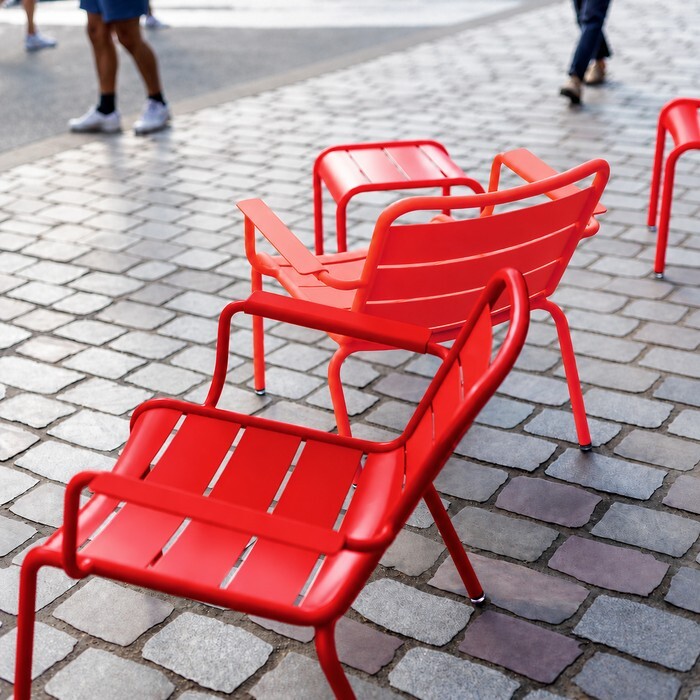
Again, quality matters; do not judge an aluminium chair purely by appearance. Look at how substantial the frame feels and ask about the construction. Aluminium is naturally lightweight, so weight alone does not prove quality, but extremely thin sections are more vulnerable to denting or bending than well-made, more substantial ones.
Look underneath the furniture too, check the welding marks. They should appear consistent and properly formed rather than as though somebody has simply put a blob of weld on one corner and moved on.
Place the furniture on a flat surface and see whether it rocks. Look at the feet too, good chairs will have suitable glides, caps or protective feet so that bare metal is not scraping across paving or decking. Ask whether these parts can be replaced because eventually they will wear.
If the chairs are stackable, ask the retailer to show you how they stack. Well-designed furniture often includes small pads or protective points so one chair is not continually rubbing against another. This matters particularly in restaurants, cafes or smaller spaces where chairs may be stacked every day.
You do not need to become an expert in aluminium construction to buy well, a good retailer should be able to explain these details and why they matter.
Powder coated furniture will still need looking after
This is often described as low maintenance, but this is not the same as no maintenance.
It will get dusty and need wiping down, water can sit in the curves at the back between the seat and back plate, when the water dries out it’ll leave a water mark so wipe it off, otherwise over time it’ll leave a faint mark; and however careful you are painted metal can eventually be marked or scratched.
Ask about aftercare before you buy; does the manufacturer offer touch-up paint or another repair system in the original colours? This is particularly useful because furniture colours can often be unique to the fabricator and difficult to match perfectly elsewhere.
I particularly like the fact that aluminium is easy to live with, it can often remain outside and uncovered for much of the year. On a crisp sunny winter day, you can wipe down a chair, add a cushion and a rug and sit outside without feeling that the whole garden has been packed away until spring.
Synthetic rattan: tactile, forgiving and comfortable
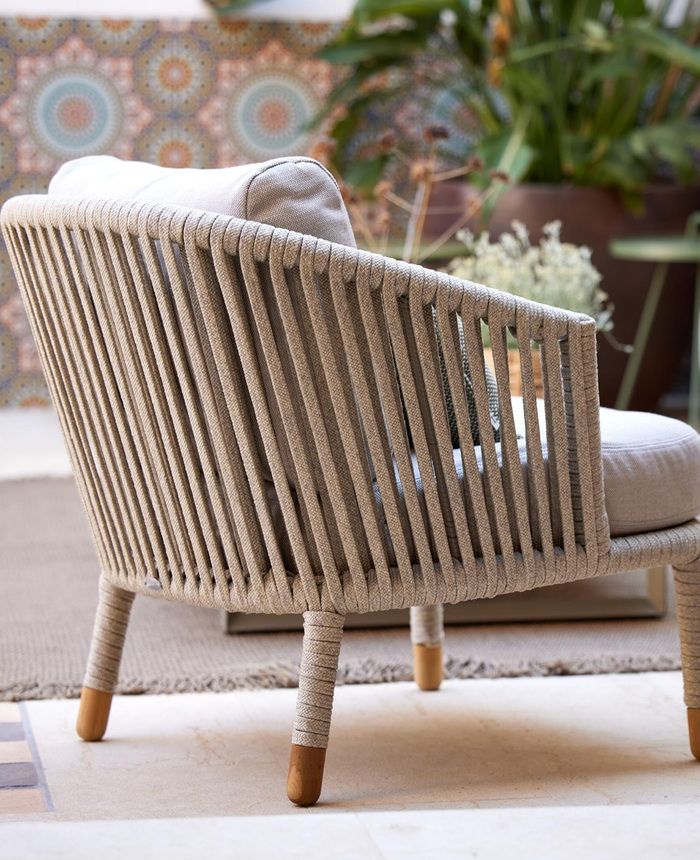
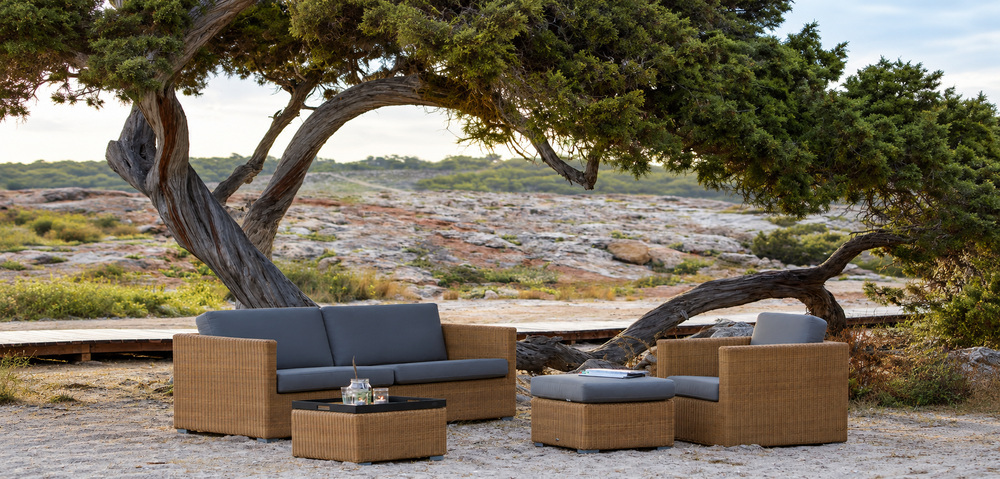
Good synthetic rattan gives a garden a softer appearance than metal, and the woven texture is pleasant to touch. It comes in a range of tones and weave styles, from pale natural colours through browns, blacks and mixed shades.
The quality test I find most useful is to lift the cushions and look underneath, checking that there is proper structural support beneath the seat. On a sofa there should be several support bars. Sit on it without the cushions, does the base remain firm, or does it sag noticeably under your weight? I have seen cheaper woven furniture where the seat gradually gives way to the point that you feel as though you are sinking into the frame.
Look closely at the weaves too, poorer-quality synthetic rattan can fade unevenly rather than simply becoming a slightly lighter version of its original colour. I have seen black weaves become brownish in more exposed areas and furniture become noticeably mottled where one side receives more sunlight than another.
I have also seen weave begin to fray where it passes around the underlying frame, particularly around heavily used seating areas.
That does not make synthetic rattan a bad material. Good-quality woven furniture can be extremely practical and comfortable, but it makes checking the construction quality and UV performance particularly important questions to ask before buying.
A knowledgeable retailer should be able to talk you through the frame, weave and UV performance, so you are not left judging all of this on your own.
So which material needs the least maintenance?
Probably none of them, anything that lives outdoors will need looking after.
Powder-coated aluminium needs wiping down, teak needs cleaning and becomes more demanding if you want to preserve its original honey colour, synthetic rattan gathers dirt within the weave and, where cushions are used, they need the same level of care as cushions on other furniture.
Outdoor fabric will occasionally need washing and debris removed from between or behind cushions.
I think it is more useful to ask what kind of maintenance you are willing to do, rather than trying to find furniture that needs none. If you love timber and are happy to let teak weather naturally, it is straightforward to own. If you like the idea of being able to wipe a chair down and use it almost immediately, aluminium is extremely practical. If you like texture and an easy, informal feel, good synthetic rattan may suit you beautifully and, if your priority is comfort - somewhere you can sit for hours, put your feet up, read, talk or occasionally fall asleep - outdoor fabric may be worth a little extra care.
So, which one is best?
For me, there isn't a winner, they all offer different things.
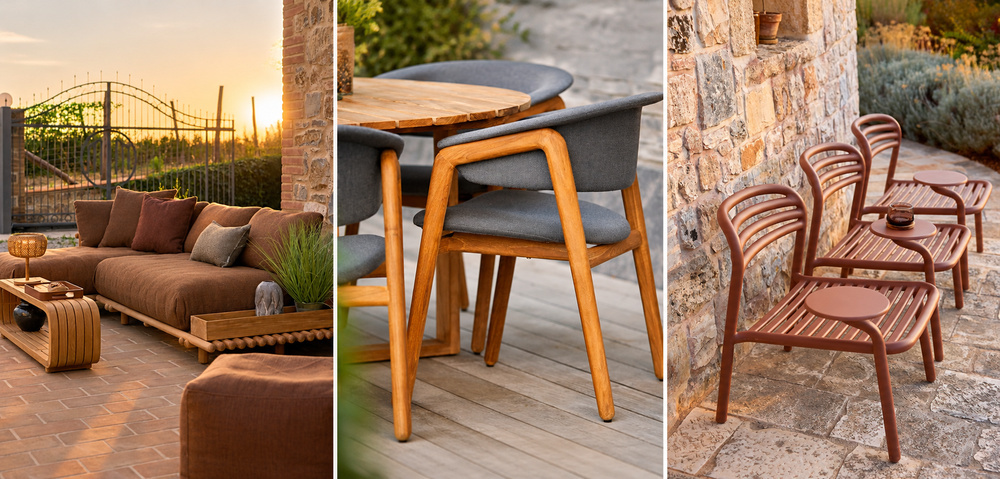
Teak is warm and beautifully tactile, outdoor fabric offers a softness and level of comfort we used to associate almost entirely with indoor furniture. Aluminium is crisp, versatile, colourful and very easy to live with and good synthetic rattan brings texture and comfort while remaining practical.
Also think about how different pieces will sit together, dining and lounge furniture do not necessarily have to be from the same range, but if they are close to one another, I prefer there to be some relationship between them - perhaps the same brand, a related palette or at least a similar design language.
The right choice ultimately comes back to how you want your garden to feel; think not only about what you want to look at, but what you want to touch, sit on and live with.
Whichever material you choose, good garden furniture should make you want to use the space more. It should suit the way you live, feel comfortable and make the garden feel like a natural extension of your home - somewhere to sit, eat, talk, read and spend more time outside.
In brief
- There is no single best material, choose according to how you want the garden to look, feel and be used.
- With teak, look at the thickness of the timber, the grain, finish and joints, then decide whether you are happy to let it weather naturally or want to maintain the honey colour.
- With outdoor fabric, look for covers that can be cleaned and cushions designed to drain and breathe.
- With aluminium, look beyond colour and shape to the frame construction, welds, feet, stacking protection and aftercare.
- With synthetic rattan, check the support beneath the seat, the quality of the weave and its UV performance.
- Every outdoor material needs some care, so choose the kind of maintenance you are comfortable with and think about how different pieces will sit together in the garden.
News
Teak, Outdoor Fabric, Aluminium or Synthetic Rattan: Which Garden Furniture Material Is Right for You?
Choosing garden furniture comes down partly to individual style and what feels comfortable to yo...
How to Choose Outdoor Furniture You'll Still Be Happy With in Five Years
Choosing garden furniture depends on your individual style and what feels comfortable, but befor...